Trim Trails
November 4, 2026 2026-11-04 17:36Trim Trails



Trim trails and adventure trails
Trim trails for schools and play areas
A trim trail is a run of balance, climbing and swinging challenges that children work their way along. They are one of the most popular things we install in school playgrounds, because they keep a lot of children busy at once and build strength, balance and confidence.
We supply and install timber and steel trim trails for schools, nurseries, parish councils and council play areas.
our work
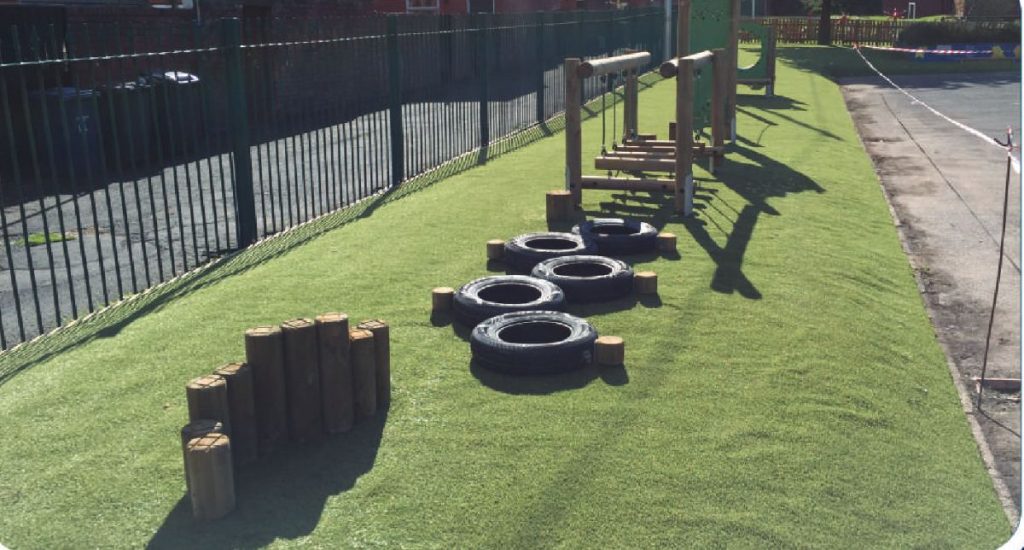
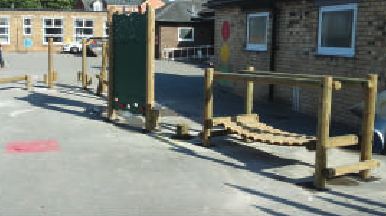
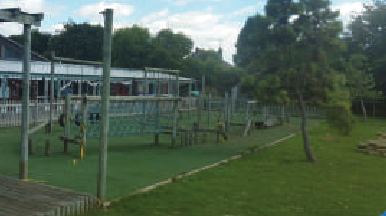
Trim trails we have installed
School and park trails, built to suit the space.

Built around your space
A trail that fits your site
Trim trails can follow a fence line, wind around trees or fill a corner of the field. We plan the layout around your space and the age of the children using it, then install each piece at the right height with the right safety surfacing underneath, whether that is grass mats, rubber mulch, bark or artificial grass.
You can start small and add to the trail later as funds allow.
Popular pieces
Trim trail equipment
- Monkey bars and trapeze rings
- Balance beams and wobbly bridges
- Stepping logs and stepping stones
- Climbing walls and scramble nets
- Tyre walks and rope traverses
- Parallel bars and stretch stations

Schools and councils
Trim trails for schools and parks
For schools, trim trails are great for break and lunch times, PE, after school clubs and early years physical development. For councils and parishes, they add challenge for older children to a park or playing field without taking up much space.
We have installed trails for schools and councils across Yorkshire, including a trim trail at Chaucers Green in Doncaster.
Planning a trim trail
Getting the most from a trim trail
A trim trail is a run of balance, climbing and agility pieces that children work their way along. It gets a lot of children moving at once and fits along the edge of a field or yard, which is why schools love them.
What goes into a trim trail
Typical pieces include stepping posts, balance beams, wobbly bridges, traverse walls, monkey bars, cargo nets, tyre swings, chin up bars and log hops. We put them together into a route that flows from one piece to the next.
Pitch it at the right ages
Lower pieces with wide steps suit younger children. Older juniors want taller climbs, longer traverses and more challenge. On a school site we often build two runs, or one run that gets harder as it goes.
Plan the route and the space
Each piece needs its own free space and enough room between pieces so children are not landing on each other. A trail along a field edge or around a playground keeps the middle of the space free for games.
Surfacing under the trail
The surfacing depends on the fall height of each piece. Low pieces can often sit on rubber grass mats on the field. Taller pieces need rubber mulch, wet pour or artificial grass with a shockpad. A surfaced path along the whole trail, like our Leeds school job, means it can be used all year.
Part of PE and break times
Teachers use trim trails for circuits in PE lessons, and children use them freely at break and lunch. A trail can keep a whole class active at once, which a single play unit cannot.
Timber that lasts
Most trim trails are pressure treated timber with steel fixings, which suits school fields and parks. We install to BS EN 1176 and the manufacturer’s instructions, set every post in concrete and check every piece before handover.
Questions we get asked
Trim trail questions
What surfacing goes under a trim trail?
It depends on the fall height of each piece. Lower pieces can sit on grass mats, while higher pieces need rubber mulch, bark, wet pour or artificial grass with a shockpad.
Can we add to it later?
Yes. Many schools start with a few pieces and add more as funding comes in.
Timber or steel?
Timber gives a natural look that suits fields and green spaces. Steel is tougher in high use or high vandalism areas. We can help you choose.
How many pieces does a trim trail need?
There is no set number. Six to ten pieces makes a good trail for a school, but we can start smaller and add to it.
Can it go on the school field?
Yes. Many trails run along the field edge, with grass mats or a surfaced path underneath.
Does it need safety surfacing?
It depends on the fall height of each piece. We set the right surfacing for every piece.
Can you add to our existing trail?
Yes. We can add new pieces to a trail you already have and extend the surfacing to suit.
We walk the site with you and plan where each piece goes, keeping enough space around each one for safe use.
Each piece is concreted in at the right height and depth, following the manufacturer’s instructions.
We lay the surfacing each piece needs, from grass mats to rubber mulch, so the whole trail meets the right fall heights.